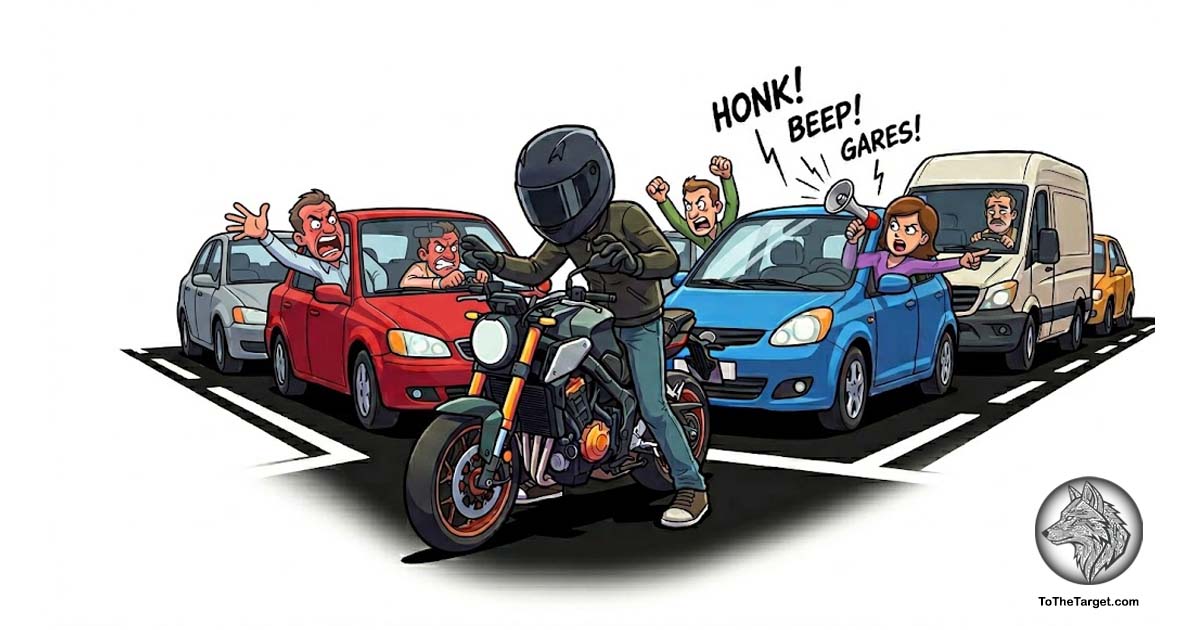
In a massive, crowded city like Bucharest, time is measured in nanoseconds. Specifically, a nanosecond is the interval between the traffic light turning green and the first horn from the angry driver behind you. If you haven’t moved within that nanosecond… you instantly become the victim of public outcry.
On my first day in traffic, I learned more curses and insults than I had in my entire life. Why? Because out of haste, nerves, and lack of habit, I stalled the engine exactly when I was supposed to take off. I restarted it, panicked even more, and stalled it again. And again. The light turned red before I moved a single inch, accompanied by a deafening symphony of horns. I felt like leaving the bike right there and walking home in shame.
Why does your clutch “cheat” on you at home, even if you were a champion at riding school?
School bikes are “tired.” Hundreds of students have abused those clutches, and instructors often adjust them to be soft and forgiving. But when you get on your own bike—especially if it’s brand new—the lever is firm, it offers resistance, and the clutch “bites” suddenly. That finesse you learned in the training yard just doesn’t cut it on the real street.
The Little Trick That Saves You: The Safety “Blip”
To avoid ending up like me, use this trick until your muscle memory kicks in: Right before you start releasing the clutch, give the engine a quick, small “blip” of throttle.
Don’t rev it to the redline and don’t hold the throttle open. Just bump up the RPMs slightly right before you hit the friction zone.
Why does it work? A slightly higher-revving engine has more inertia. When the clutch engages, the engine doesn’t have to work as hard to move the motorcycle’s mass, reducing the risk of stalling to near zero. Interestingly, some modern bikes do exactly this through their computer (ECU) without the rider even knowing. But if you have a classic model or want to be in total control, the “blip” is your lifesaver.
Don’t worry; in a few days, it will become a reflex. But until then, use those extra RPMs to buy the confidence you need during that critical nanosecond at the green light.
If you liked this article, you’ll love what’s inside.
A book packed with useful advice, written in a “no-fluff” style, like a conversation between friends.