The DRI Criterion and the After Action Review: Closing the Learning Loop
From Blameless Military Debriefings to the Single Accountable Owner: How to Convert Yesterday’s Failures into Simple Operating Procedures Without Bureaucracy
Many companies proudly proclaim a venerable tradition in marketing brochures: “We possess over half a century of industry experience!”.
Look beneath the hood, however, and you uncover a striking paradox: many organizations do not possess 50 years of genuine institutional experience; they possess a single year of experience repeated poorly 50 times. This occurs because they execute the exact same workflows repeatedly, failing to extract authentic lessons from past failures.
If operational lessons reside exclusively within the individual memory of a site manager on a construction scaffold or the chief engineer inside a dairy plant, your company commands zero institutional experience:
- When that key individual resigns to join a competitor or retires, the entirety of accumulated operational wisdom departs with them through the factory gate and evaporates in the parking lot.
- The firm hires a replacement and proceeds to pay out of pocket for the exact same expensive mistakes it believed it had resolved years ago.
For an organization to genuinely own experience, ground-level errors must be harvested rapidly and engineered into systemic mechanisms. The most effective framework ever conceived for this purpose emerges from military doctrine: The After Action Review (AAR).
The After Action Review (AAR): The Blameless Autopsy of Cold Facts
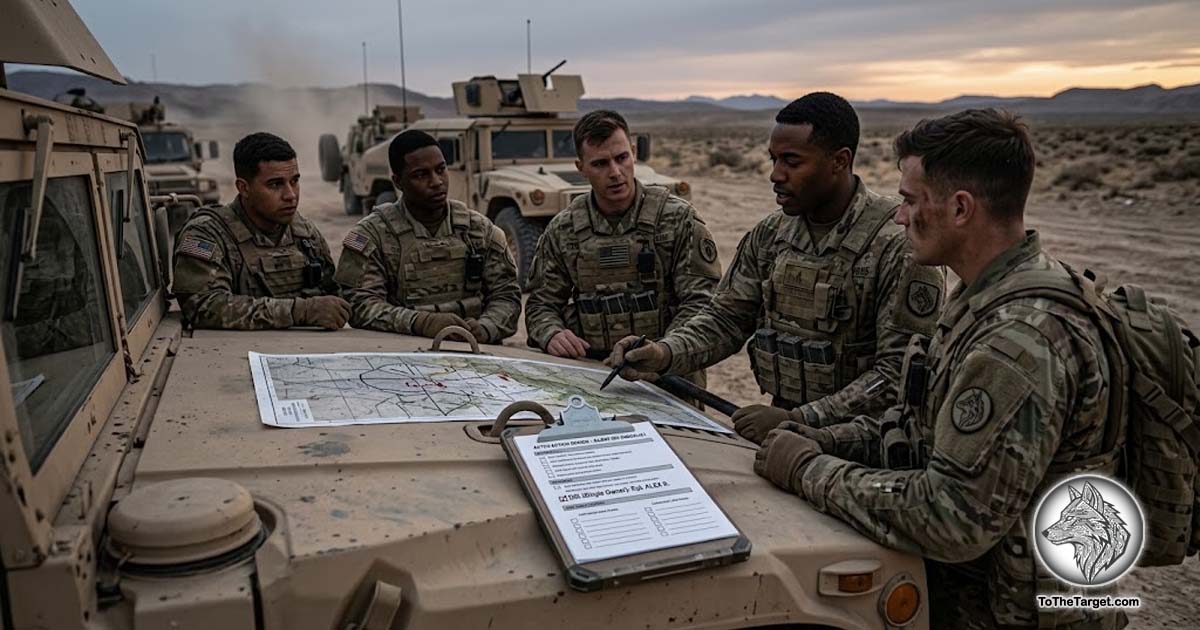
Engineered by the United States Army in the late 1970s (spearheaded by General Gordon Sullivan) to reconstruct organizational doctrine following the trauma of the Vietnam War, the After Action Review was never designed as an administrative tribunal; it was built as a frontline survival instrument.
Soldiers did not conduct debriefings out of an appetite for paperwork; they executed AARs for a brutally pragmatic objective: ensuring they did not repeat the exact same fatal mistake on tomorrow morning’s mission.
The Supreme Rule: “Insignia Left at the Door” (The Blameless Post-Mortem)
The moment an analytical debriefing devolves into a punitive witch-hunt where leadership hunts for heads to roll, institutional learning flatlines instantly:
- Operators retreat into defensive postures, conceal unfavorable telemetry, and deflect accountability across adjacent silos (The Diffusion of Responsibility).
- Executive leadership remains pacified by sanitized, green watermelon reports.
Inside a professional AAR, we isolate systemic friction within the process, guided by The 4 Fundamental Inquiries:
- What was supposed to happen? (What was the baseline deployment plan, the committed deadline, and the measurable outcome?)
- What actually happened? (The unvarnished chronological telemetry of facts, evaluated via empirical data and physical results).
- Why was there a variance between plan and reality? (Root-cause analysis: what executed like clockwork, and where did the operational chain break?)
- What do we execute differently next time? (What procedure do we standardize, what do we adjust, and what new operational rule do we codify to guarantee we never pay for the same mistake twice?)
The objective is never to hunt for culprits; the objective is to optimize the workflow and eliminate systematic vulnerabilities: What failed—so we never repeat it? What succeeded—so we standardize and replicate it identically?
The Mechanics of the AAR Session: The Three Proportions Formula (25% — 25% — 50%)
The single greatest mistake in an operational debriefing is burning 90% of session time arguing over the past. Inside a professionally facilitated AAR (which typically spans 30 to 45 minutes), time is allocated across a strict mathematical formula:
- Objective Telemetry (The Opening 25% of Time): What Was Supposed to Happen vs. What Actually Happened
Review the baseline operational plan, committed tasks, milestones, and the targeted end state. Map the chronological telemetry of verified events onto the whiteboard, completely free of excuses and subjective justifications. Every operational viewpoint carries equal weight. - Root-Cause Analysis (The Subsequent 25% of Time): Why Did It Happen That Way?
Analyze causal mechanisms and operational dependencies, strictly avoiding personalities. The facilitator enforces a golden rule: focus exclusively on WHAT, never on WHO. We do not isolate who failed; we audit what procedural gap or communication breakdown permitted the failure to materialize.
- Future Action & Standardization (The Final 50% of Time): What Do We Execute Differently Next Time?
This is the operational core of the entire session! Half of the entire meeting is dedicated exclusively to the future:
- Mitigating operational vulnerabilities: Focus strictly on variables within direct internal control, ignoring external factors that cannot be influenced.
- Standardizing operational strengths: Identify exactly what executed flawlessly, codifying those actions so they are replicated identically across future deployments.
Facilitator Technique: The Linguistic Shift and Collective Decompression
To prevent the session from degrading into a cross-departmental brawl or a sterile corporate compliance exercise, the facilitator deploys two psychological levers:
The Linguistic Shift of the Diagnostic Inquiry
Never ask the room: “What went wrong?”. That specific phrasing triggers immediate defensiveness, blame avoidance, and fear of punishment. Instead, enforce the constructive framing: “What could have gone better?”. This subtle recalibration shifts executive cognitive processing from defensive posturing directly into active workflow optimization.
The Golden Insight: Decompression and Shared Laughter
Nowhere is it written that an After Action Review must operate as a somber funeral conducted with furrowed brows. Quite the contrary: the session serves as a legitimate forum for emotional decompression. Teams should look backward with healthy nostalgia, sharing a laugh over the absurd near-misses, logistical panics, and high-wire moments they endured and conquered together. Humor functions as the ultimate psychological lubricant to defuse residual trauma and cement collective resilience.
Formal AAR vs. Informal AAR & The In-Stride AAR: Never Wait for the End of the War!
The architecture of an AAR scales proportionally to operational scope:
- The Formal AAR: Scheduled in advance inside a conference room, steered by a dedicated facilitator, convening all primary stakeholders of a closed major project. Takeaways are formally codified and published across internal knowledge bases.
- The Informal AAR (In-Stride / On the Fly): Executed in 15 minutes on the tailgate of a truck the morning after a foundation slab is poured or following the deployment of a software sprint. Operational learning is immediate, telemetry is fresh, and corrections deploy directly into the subsequent phase of execution.
Reframing Utility: What Does the Operator Win?
First, teams must grasp an elementary reality: analytical review is an integral component of the project itself, not an optional extracurricular burden. Review hours are formally budgeted into the scope of work; it is an active deliverable, even if its findings serve internal operational capability rather than external clients.
Yet, nobody is energized to complete post-mortems for an abstract corporate slogan like “organizational process hygiene.” If you require genuine, candid engagement from the room, you must demonstrate their direct, personal return on investment:
“I recognize these past weeks were brutal and that you bore severe stress due to cross-departmental communication breakdowns. This focused 20-minute session is not for management archives; it is engineered to ensure you never endure this operational headache on the next deployment! I want to isolate the exact broken procedure that stole your weekend so we can dismantle it right now.”
The moment operators realize the AAR functions as an instrument engineered to protect their personal bandwidth and future peace of mind, resistance evaporates and authentic collaboration takes root.
The DRI Criterion (Apple): The Single Accountable Owner
The greatest hazard following a brilliant AAR is permitting strategic takeaways to linger as vague, collective aspirations written on a whiteboard: “It was resolved that Engineering will improve communication with Logistics.” When a responsibility belongs to everyone, it belongs to no one.
At Apple, Steve Jobs permanently eradicated this corporate ambiguity through the principle of the DRI (Directly Responsible Individual):
- Across every action matrix, next to every single operational fix derived from an AAR, there appears EXACTLY ONE NAME printed in bold.
- The DRI owns the milestone indivisibly. This does not mean they physically execute every technical line item personally; it means they command the wheel: they coordinate execution, audit deadlines, and answer directly to leadership for the systemic deployment of the new rule.
- If a post-mortem action item lacks a nominal DRI, it remains a pious wish devoid of operational value.
The Death of 50-Page Binders: The One-Page Living Checklist
Across most corporate enterprises, internal standard operating procedures are a dead letter: dusty, 50-page binders written in dense legalese by an employee prior to resigning, solely to clear an external ISO audit, untouched for five years.
A living procedure, forged inside an authentic AAR, is never an academic treatise; it is a single-page operational checklist:
- Did the team discover that concrete was cast during heavy rainfall lacking the mandatory waterproofing chemical additive? The designated DRI does not author a 40-page technical manual. They insert a single mandatory checkbox on the site casting sheet: „[ ] Verify waterproofing suffix W on batch delivery ticket prior to pour if precipitation occurs.”
- If an operational procedure cannot be reviewed, verified, and executed in under 60 seconds on the frontline, it will never serve as a genuine barrier against operational failure.
Executive Conclusions
- The Punitive Inquisitor: Hunts for culprits when milestones slip, ignores analytical reviews when projects close without immediate crisis, abandons action items to nameless committees, and pays for the exact same expensive failures year after year.
- The AAR and DRI Leader: Recognizes that process failures represent tuition fees already paid by the balance sheet. Conducts rapid, blameless debriefs, extracts ground truth from the field, assigns every single takeaway to an explicit DRI, and transforms collective scar tissue into simple, one-page checklists.
Never permit hard-won, expensively purchased experience to evaporate the moment a deliverable crosses the finish line. Halt operations for 15 minutes, audit the telemetry with absolute objectivity, designate a single accountable owner, and guarantee that no failure is paid for twice!
If you liked this article, you’ll love what’s inside. This tool is forged and battle-tested inside our playbooks: