Picture this: you are on a deserted road. Your friend is down, bleeding or unconscious. The ambulance is dozens of miles away. The difference between a survivor and a tragedy lies in what you do in the next few minutes.
You are not a doctor, but you can be his shield until the professionals arrive.
The Neck: As Fragile as Cooked Asparagus
The spinal cord has the consistency of cooked asparagus. It is incredibly fragile, while the surrounding bones are hard. If the neck is fractured, any wrong move can sever the cord, leading to instant paralysis or death.

The Golden Rule: If the victim is unconscious or complains of neck pain, or numbness in the shoulders, arms, or legs, DO NOT move them. The only exception: if their life is in imminent danger (e.g., the motorcycle has caught fire).
The Helmet: If the victim is breathing, DO NOT remove the helmet. Any force applied to the head to remove the protection can be fatal to the spine. It is better to be overly cautious than to regret it for the rest of your life.
Trauma Scanning: The One-Minute Test
“First, do no harm.” Act with calculation, not impulse. Your first move: call emergency services (112/911). Then, take a step back, breathe, and execute the following:
- Immobility: Do not move the victim until you know the extent of their injuries.
- Interrogation: Ask them what happened. If they answer coherently, it’s a good sign for the brain. If they are confused or silent, it’s a maximum alert.
- Spine Check: Ask about neck pain or any tingling/numbness in the limbs.
- Visual Inspection: Look for open wounds on the head and chest.
- The Abdomen: If the abdomen is hard as a rock (rigid), tender to the touch, or spasming, it may be a sign of internal bleeding. This is an emergency!
- The Limbs: Gently check arms and legs for fractures or dislocations. Immobilize them in the position you found them; do not try to straighten them by force.

The Critical Indicator: If you cannot wake the victim, the situation is extremely grave. Every second counts.
Be Prepared: Prevention is the Best Doctor
Gear is not fashion; it is armor. Always wear the best helmet, gloves, boots, and suit you can afford. This is how you give yourself the highest chance of survival in the event of a crash.
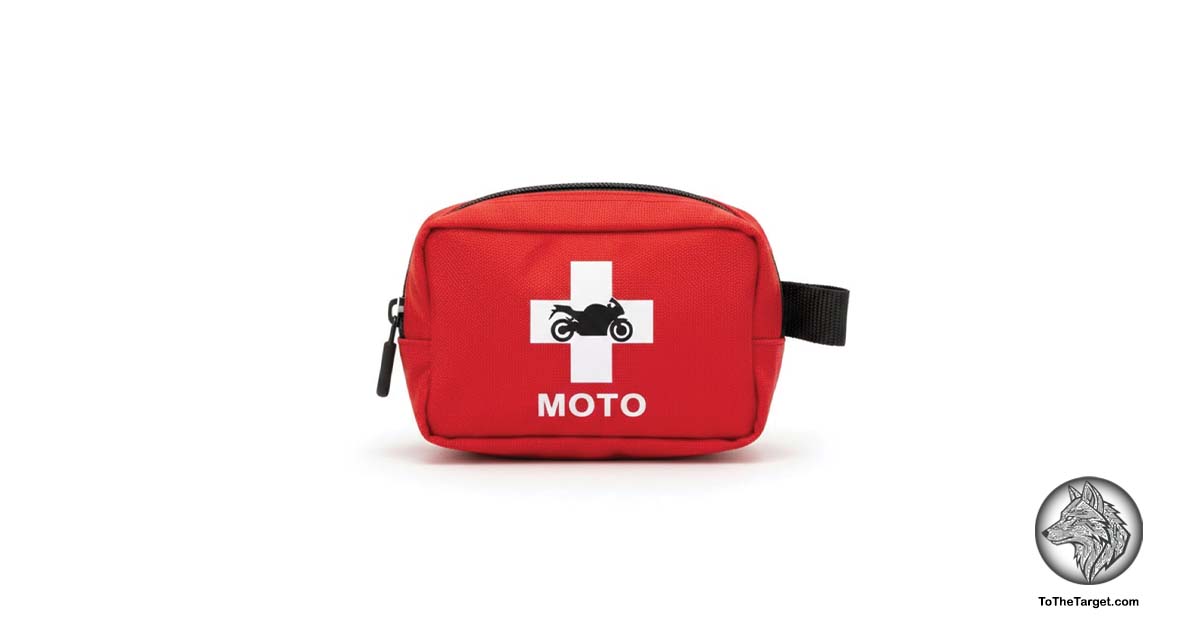
- In Your Luggage: A first-aid kit (bandages, disinfectant, splints, sterile dressings) is ideal. However, in practice, few people think about this. Space is precious on a motorcycle, and it’s a bit demoralizing to leave home focused on the worst-case scenario.
- The Phone: Keep it charged.
- Camaraderie: Not riding alone is your best life insurance policy.
“Road Rash”: The Highway Version
If you don’t have hydrogen peroxide and Betadine (and you probably don’t), here is what you actually do when you’re covered in blood and dust:
Road Rash (Abrasions): If you’ve “bitten” the asphalt and are covered in scrapes, the priority is to keep the dirt out of your system.
Drinking Water: Use the bottled water from your backpack to rinse the wound. Plain water is better than nothing. Do not use soda or sweetened drinks!
Do Not Scrub: Just pour the water to wash away dust and grit. If dirt is deeply embedded in the skin, leave it alone until you reach the hospital—trying to “clean” it with dirty hands is a guaranteed recipe for infection.
Improvise: If you are bleeding and have no bandages, use a clean T-shirt (or the cleanest part of a garment) to apply pressure to the area.
Betadine: Save that for home or when you reach a pharmacy. Until then, basic cleaning and protecting the wound are all you can do on the side of the road.
Resuscitation: The Fight for Every Second
It would be a lie to believe you can master life-saving skills just by reading these lines. The best thing you can do for yourself and your friends is to attend an authorized first-aid course, where you can practice on mannequins under medical supervision. Until then, if the heart has stopped, here is what you must do:
- Check for Consciousness: Gently shake his shoulders and shout. If he doesn’t respond and isn’t breathing normally (or is only gasping), his heart has stopped.
- Call 112/911: Put the phone on speaker next to you so you can communicate with the dispatcher while you work.
- Positioning: Kneel beside him. Place the heel of your hand in the center of the chest (on the sternum). Place your other hand on top and interlace your fingers.
- Compressions: With your arms perfectly straight, use your body weight to push the chest down about 5-6 cm. Let the chest recoil completely after each push, without lifting your hands off it.
- Rhythm: Maintain a rate of 100-120 compressions per minute. You don’t need to memorize songs; just think about pushing nearly twice every second. It is exhausting work, but vital.
- The 30:2 Ratio: If you feel capable and have had basic training, after 30 compressions, give 2 rescue breaths (pinch the nose, seal your mouth over his, and blow moderately until the chest rises). If you are unsure about the breathing, perform continuous compressions only. It is far more important to keep blood moving to the brain.
Crucial Fact: Resuscitation started immediately leads to a survival rate of 49-75%. Every minute of delay decreases the chances of survival by 10-15%. After 10 minutes without help, the chances are nearly zero.
Entering Shock
Shock is the moment when the body begins to “shut down” due to massive blood loss or the collapse of the nervous system.
Signs: Weakness, pale and cold skin, difficulty breathing, unusual agitation, or a rapid and weak pulse.
What to do: Stop any visible bleeding. Lay the victim on their back and raise their legs to direct blood flow toward the brain. Cover them with a jacket or blanket to maintain their body temperature.
Crucial Fact: Shock sets in as the overall condition deteriorates. Even if your friend seems “OK” immediately after the crash, monitor them second by second.
Heatstroke and Heat Exhaustion
Riding for hours under a scorching sun without hydration can be fatal. When the brain can no longer regulate temperature, the victim essentially “boils in their own juices.”
Signs: Sweating stops, skin is hot and dry, spasms or fainting occur.
What to do: Move them to the shade immediately. Cool them down with wet clothes or ice. Give them water in small sips.
Crucial Fact: Drinking water is only a temporary emergency measure. The victim urgently needs intravenous rehydration in a hospital.
Fractures
Immobilization is the keyword. An improvised splint takes over the role of the broken bone.
What to do: Use whatever is at hand: a thick magazine, a piece of wood, or a stiff cable. Secure the splint with an elastic bandage or strips of clothing. Do not attempt to straighten the limb.
The Collarbone (Clavicle): If broken, immobilize the arm against the chest using an improvised sling.
Bleeding
Direct pressure on the wound stops the bleeding in most cases. Use any clean cloth available.
Arterial Bleeding: If blood is spurting forcefully, you need a tourniquet. Apply it above the wound (toward the heart) and tighten it until the bleeding stops.
Crucial Fact: Note the exact time you applied the tourniquet. Communicate this to the medical staff. Contrary to old theories, modern protocols (TCCC) recommend not loosening the tourniquet yourself, to avoid releasing toxins or restarting the hemorrhage.
Your Safety (Priority Zero)
Do not become the second victim. Before you help, secure the scene. If a car hits you while you are providing first aid, you won’t be able to help anyone. Keep your cool.
Recap (The ABCs of Survival)
Safety: Secure the accident scene.
- ABC Assessment:
- A (Airway): Ensure clear airways.
- B (Breathing): Is the victim breathing?
- C (Circulation): Check for signs of life/pulse.
- The Helmet: DO NOT remove it unless it is absolutely necessary for breathing.
- Bleeding: Stop any massive hemorrhaging.
- Immobility: Do not move the victim (assume a neck fracture).
- 112 / 911: Call emergency services immediately.
- Stabilization: Maintain body temperature and monitor until the ambulance arrives.
- Access: Clear the path for the medical stretcher.
If you liked this article, you’ll love what’s inside.
A book packed with useful advice, written in a “no-fluff” style, like a conversation between friends.