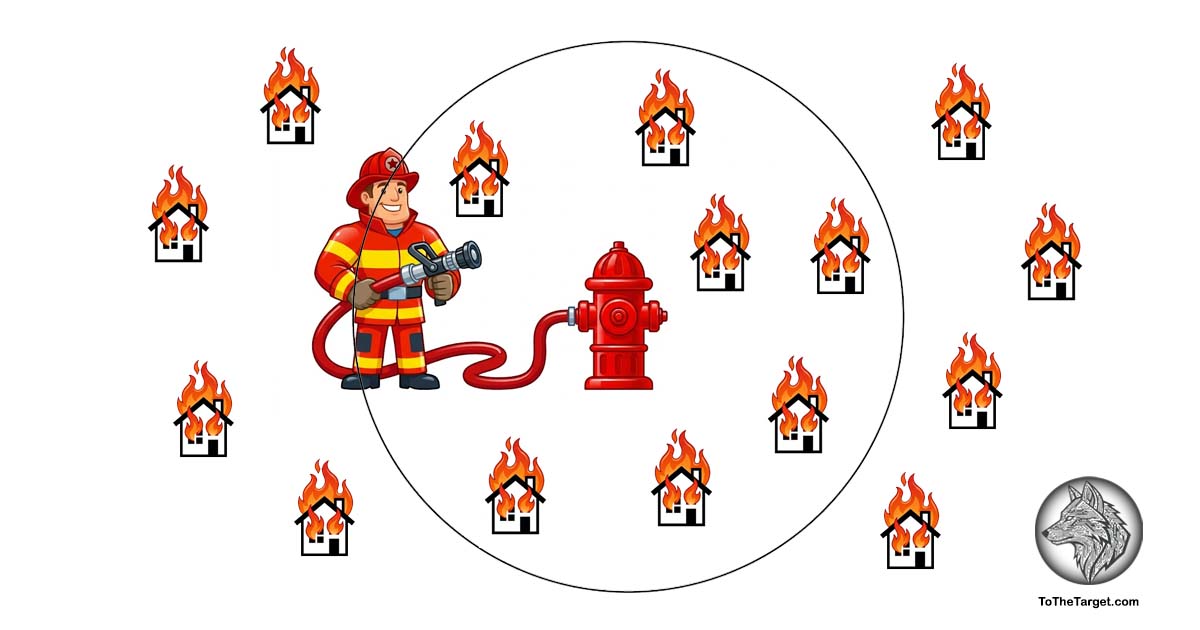
If you feel like you’re working 12 hours a day and still can’t get ahead, it might not be the workload—it’s a mathematical law you’re trying to ignore: Span of Control.
Span of Control is the number of people reporting directly to you. In modern management, the “heroism” of having 15-20 direct reports is a guaranteed recipe for burnout and failure. Why? Because the human brain has a natural cognitive limit for managing complex interactions. Every time you add a new subordinate, you don’t just add their workload; you increase the need to manage the shifting relationships between them and the rest of the team.
Signs You’ve Crossed the Safety Line:
- The Office Queue: People wait for you to make every 5-minute decision. Processes stall because you are the only source of approval.
- Forced Micromanagement: You give short, blunt orders because you lack the time for context or explanation. Result? Repeated mistakes and half-baked tasks.
- Abandonment: Your top performers feel ignored and stagnant. Eventually, they start looking for opportunities elsewhere.
The Magic Number:
- For complex tasks, the optimal limit is 5-7 subordinates. Beyond this threshold, you aren’t a manager anymore; you’re a firefighter, putting out blazes caused by your own faulty structure. You become an obstacle to your own team.
- For repetitive tasks, you can effectively manage between 15-20 subordinates.
The Quick Fix? You must fragment the hierarchy. Even if your company doesn’t allow for new hires or official reorganization (adding a new management layer), you can designate “Team Leaders,” “Project Managers,” or “Process Owners.” They can filter minor issues before they ever reach your desk. Give them status and authority in exchange for your strategic thinking time.
If you can’t take a week’s vacation without your phone ringing incessantly, your Span of Control has become a prison of your own making.
It’s time to understand that management means getting results through others, not doing everyone’s job. Delegate not just tasks, but decisions.
If you liked this article, you’ll love what’s inside. This tool is forged and battle-tested inside our playbooks: