Universal Ground Rules and the Facilitator’s Role: The Meeting Constitution
How to Transform an Arena of Egos into a Decision Laboratory Through Active Arbitration, Clear Rules of Engagement, and Strategic Silence
— What’s wrong?
— Nothing.
— Did I upset you?
— No.
— Did I do something wrong?
— No.
— Did I say something regarding your unstated expectations about what I should have done while you were refusing to talk to me?
— Possibly.
If you have ever been in a relationship, you instantly recognize this exchange. It is the archetype of passive-aggressive friction: one party does not know exactly what they want or has avoided the hard effort of clarifying their own needs, yet unloads the burden onto the other, expecting them to magically read their mind. The outcome is inevitable: frustration, mutual resentment, and slammed doors.
Bizarrely, this is the exact psychological mechanism through which 90% of executives schedule and lead corporate meetings.
The Combustible Room and the Death of Fair-Play
As Voltaire observed centuries ago, “Common sense is not so common.”
In no other corporate activity is this reality more painfully evident than in an executive conference room. If you leave a meeting to the mercy of unwritten etiquette, you reliably produce an arena of the jungle: the loudest participants monopolize speaking time, quiet specialists are talked over, professional debates degenerate into subtle sarcasm, and decisions are forged on decibels rather than data.
Under acute pressure, human nature reacts tribally: people who ascend to executive seats are competitive, territorial, and wired to dominate. Without an unyielding structure, an executive meeting becomes a room saturated with combustible gas: at the slightest spark of wounded pride or perceived disrespect, the room detonates into defensive posturing, recriminations, and decision gridlock.
In a high-stakes football match, the romantic notion of sportsmanship ends without a referee: players dive, stall, and push the rules to the limit. In an executive meeting where multi-million-dollar budgets are decided, relying on politeness is an operational delusion.
Ground rules are not parlor etiquette; they are the safety engineering system that guarantees a leadership team manufactures decisions rather than sterile conflict.
Separation of Powers: Content vs. Process
The most common governance failure is confusing the role of the Decision-Maker (Content) with the role of the Facilitator (Process):
- Content: The technical parameters, baseline numbers, strategic risks, and final commercial verdict (What we decide).
- Process: Timekeeping, speaker order, halting digressions, and enforcing agenda compliance (How we decide).
Many organizations operate on the fragile model of the “Providential Leader”: an authoritarian director who keeps the room in check through sheer force of personality. As long as they occupy the head of the table, nobody steps out of line. Yet the moment that leader is absent, the room collapses into tribal chaos.
Order anchored solely in the personal charisma of a single individual is an institutional vulnerability. The system must operate on codified rules, not on the mood swings of one person.
Furthermore, when the Chief Executive Officer (CEO) attempts to act simultaneously as judge and referee, the Paralyzing Effect of Authority takes hold: attendees stop debating operational ground truths and focus entirely on guessing what the boss wants to hear.
A true leader never sits behind the steering wheel. He lets the chauffeur navigate the traffic and trade horns with other drivers. He sits quietly in the back seat and waits for the door to be opened for him. It is the exact same dynamic in a meeting: a true leader does not bicker across the table, nor do they watch the clock. They let the facilitator direct the room’s traffic, stepping in with absolute authority only at the very end, when the floor is yielded to them for the final verdict.
Why an Intelligent Leader Speaks Last
A dominant executive instinctively feels the urge to take the wheel within the opening minutes of an assembly. Yet a seasoned leader understands that speaking first is a catastrophic tactical error:
- The Farce of the Expensive Echo: If you compensate a team of senior directors with significant salaries, and tell them your opinion in the first five minutes, you have burned corporate capital. Attendees will instinctively align their views to flatter you, while critical operational risks remain buried.
- The Competence Radar: When you remain silent, you observe the room with sniper-like clarity. You immediately discern who reviewed the pre-circulated brief, who argues from empirical telemetry, and who improvises rhetoric to mask execution delays.
- Holding the Cards: In any strategic negotiation, whoever speaks first reveals their position. Whoever speaks last commands absolute leverage.
In premier Japanese conglomerates, senior leaders practice deliberate restraint:
- The Sumo Principle (Shikiri): Prior to physical contact, the two giant wrestlers crouch and hold a silent stare-down. It is a psychological test of nerves: whoever loses patience and rushes forward forfeits their leverage before the clash begins.
- The Art of Ma (Meaningful Silence): To an untrained executive, ten seconds of silence feels like an awkward void that must be frantically filled with chatter. To a master, silence is an instrument of cognitive processing and constructive pressure.
- The Art of Haragei (Visceral Telemetry): The capacity to listen beyond verbal statements—reading physical posture, micro-expressions, shared glances between peers, and unstated corporate tensions.
The mature leader maintains silence throughout the debate, allows arguments to exhaust themselves, and intervenes at the conclusion with surgical precision to sever the gordian knot.
Cognitive Discipline: Eradicating Tangents and Whataboutism
Meeting discipline entails far more than refraining from speaking out of turn. It demands the logical hygiene of arguments.
Derailments stem from two predictable behavioral pathologies:
- Fleeing to Familiar Ground (The “Cucumber” Syndrome): When an attendee arrives unprepared without having reviewed briefing materials, vanity prevents them from staying silent. Rather than admitting ignorance, they reflexively derail the discussion toward the single narrow topic they feel comfortable with (a minor logistics grievance, an old dispute, or an administrative error). The tangent serves as an ego-shield to mask lack of preparation.
- Corporate Whataboutism: When a department is confronted with a missed deadline or a production defect, their defensive instinct mirrors a driver caught by a speed radar: “Look at the other car speeding ahead, why didn’t you pull them over?!”. They point fingers across the aisle: “Why aren’t you auditing Sales? Didn’t you see their campaign was late?”.
The Facilitator’s intervention halts the evasion within seconds: „Today we are analyzing the production deadline and the bottleneck on this specific workflow. When we audit Sales, we will address their metrics. Now we return strictly to the active agenda item.”
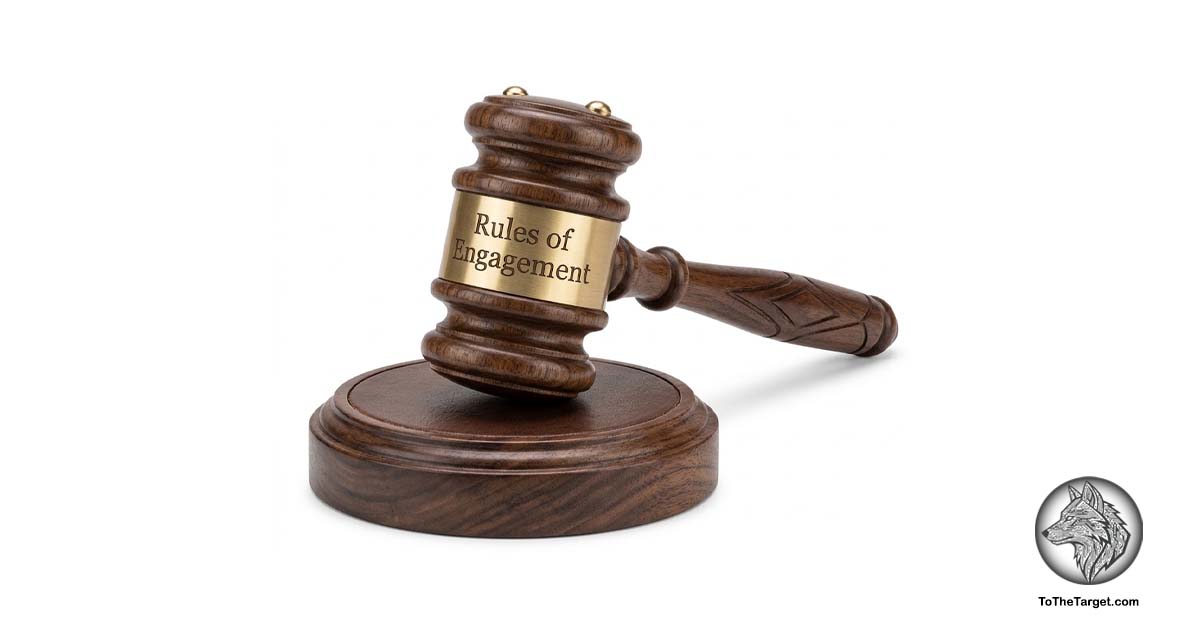
The 5 Universal Ground Rules (The Meeting Constitution)
Every effective meeting room displays and enforces these five non-negotiable laws:
- Nominated Speaking Only: Nobody speaks without being formally recognized by the facilitator. Interrupting a colleague mid-argument is treated as an immediate procedural foul.
- Attack the Process, Not the Person (Ad Rem, Non Ad Personam): Debate centers strictly on workflows, telemetry, and operational hypotheses; personal attacks, sarcasm, and professional labeling are prohibited.
- The Clean Screen Standard: Banning technology outright is unrealistic: a specialist requires a laptop to audit code, schematics, or real-time dashboards. The common-sense standard: only a single active screen per attendee is permitted, open strictly to the document or dashboard under live review. Parasitic windows are banned, and phones remain on silent.
- Guarding the Clock (The Hard Stop): The session adjourns the second the allocated agenda time expires, not when attendees run out of words. Five minutes prior to the ceiling, the facilitator closes the floor to record the binding decision, the Directly Responsible Individual (DRI), and delivery milestones.
- “Silence Equals Agreement” (No Hallway Vetoes): The conference room is the only legitimate tribunal where objections may be raised. If a participant was present and chose to remain silent, they are held to have agreed 100% with the final verdict. Contesting or subtly sabotaging the decision at the watercooler after adjournment constitutes a severe breach of professional conduct (Disagree and Commit).
Executive Conclusions
- The System-Free Manager: Leaves meetings to chance, speaks first to dominate the room, tolerates tangents on secondary topics, and wonders why decisions are routinely subverted in the hallway after adjournment.
- The Leader with a Meeting Constitution: Understands power dynamics and fragile egos, sits quietly in the back seat as an executive passenger, entrusts the process to an uncompromising facilitator, listens first and speaks last, anchors debate in empirical facts, and demands total commitment upon exiting the room.
Without a referee and clear rules, an executive meeting is merely an expensive street fight paid for by corporate payroll. Post the constitution, empower the facilitator, and enforce the discipline of decisive execution!
If you liked this article, you’ll love what’s inside. This tool is forged and battle-tested inside our playbooks: