The 6-Page Memo and Silent Meetings: The Updated Amazon Model
How to Eliminate the Tyranny of PowerPoint, Force Clear Thinking Through Narrative Prose, and Conduct Decision Meetings in Absolute Silence
On June 9, 2004, Jeff Bezos sent a brief email to his executive leadership team at Amazon (the S-Team), a message that permanently redefined how high-stakes decisions are forged in modern enterprise:
“Starting today, PowerPoint presentations are completely banned in our executive meetings. All decisions will be based on a structured narrative memo, read in total silence at the opening of the session.”
Through this single decree, Bezos introduced two inseparable institutional innovations to corporate governance: The Narrative Memo and The Silent Meeting.
Why Bezos Banned PowerPoint
PowerPoint was engineered as a sales pitching tool, not an instrument for rigorous capital allocation. In strategic deliberations, slides function as a decorative smoke screen for intellectual mediocrity:
Bullet Points Conceal Broken Logic
On a slide, a presenter can drop three disconnected phrases that share zero causal relationship, yet appear authoritative on a vibrant display. Narrative prose, by contrast, physically forces the mind to construct syntax, conjunctions, and logical dependencies: “We execute X, because Y triggered Z, and the direct commercial consequence is W”. If an operational hypothesis harbors a logical fallacy, written prose exposes it instantly.
The Unearned Advantage of Charismatic Speakers
A charming director with sharp comedic timing and the delivery of an actor can successfully “sell” a catastrophic proposal if accompanied by slick visuals. Meanwhile, a brilliant but reserved technical specialist is marginalized. The narrative memo levels the playing field: proposals compete on the empirical substance of the written word, not on the vocal decibels of the speaker.
Manipulative Pacing Control
In a slide deck, the presenter controls conversational velocity. If they wish to conceal an uncomfortable capital expenditure or a structural risk, they flash past the cost slide in ten seconds, remarking dismissively: “We’ll move quickly past this; the line items are in the appendix!”. In a silent meeting, the decision-maker spends five uninterrupted minutes dissecting that exact cost breakdown, line by line.
The 6-Page Rule: A Maximum Ceiling, Not a Minimum Quota!
A widespread misconception surrounds the number “6”: six pages represents the absolute maximum ceiling for global initiatives (such as launching AWS or Amazon Prime), not an obligation to manufacture corporate padding!
If an operational decision can be evaluated and resolved in two or three pages, artificially diluting it to reach six pages is an organizational waste of time.
At Amazon, two primary formats govern execution:
- The 2-Pager: Deployed for 80% of routine operational decisions, quarterly resource shifts, and workflow adjustments.
- The 6-Pager: Reserved exclusively for major capital commitments, strategic M&A evaluations, or enterprise-defining product architectures.
What Is the “Silent Meeting” and How Does It Work?
Under conventional management, a meeting opens with an individual speaking, projecting slides, and pacing the room, while attendees listen in a state of semi-conscious fatigue.
The Amazon model completely inverts this dynamic:
- Attendees enter the boardroom (strictly 6 to 8 participants, following the Two-Pizza Rule).
- Each participant receives the printed document at their seat (or on an offline display set to airplane mode).
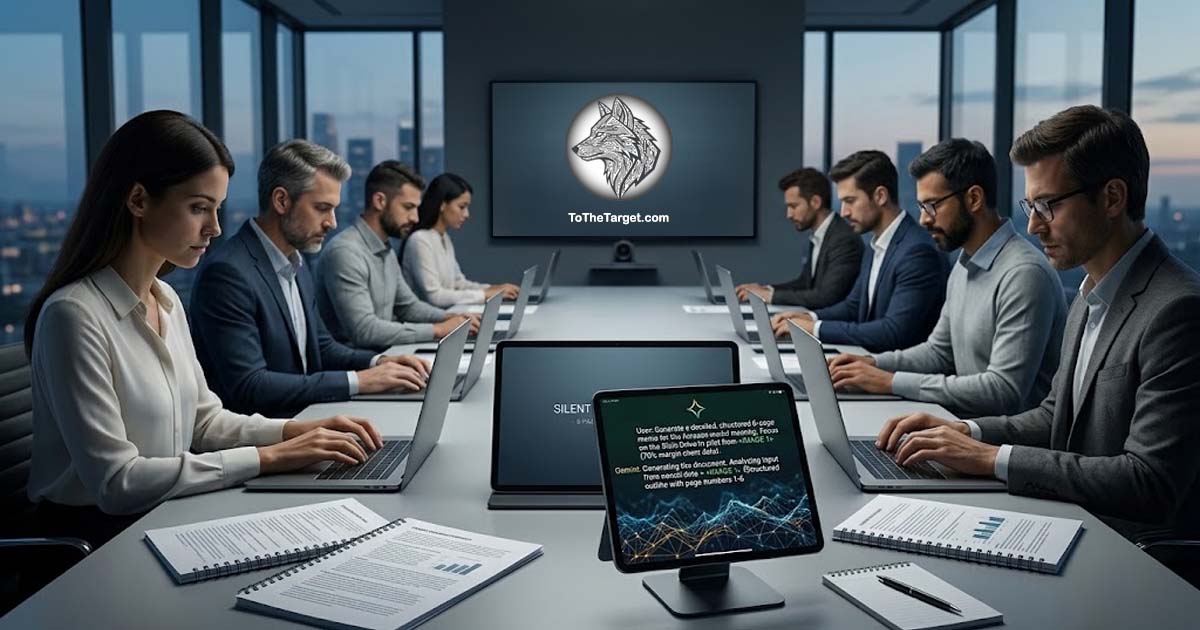
- Nobody speaks. For the first 20 to 25 minutes, the room maintains cathedral-like silence. Every executive reads the text from first word to last, pen in hand, recording diagnostic questions, calculations, and objections directly in the margins.
Why Did Bezos Engineer This Format?
Because he grasped an unvarnished human truth: executives lie when they claim to have read pre-circulated briefing materials! In reality, nobody reads PDFs distributed via email the day before; attendees glance at them on their smartphones inside an elevator five minutes prior to the session.
By locking the opening 20 minutes for synchronous, in-room reading, all decision-makers enter the debate with their working memory simultaneously loaded with the exact same verified data, permanently eliminating the excuse that “I didn’t have time to review the attachment.”
Minute 26: Zero Presentations!
There is no verbal walkthrough. The session bypasses all presentations, transitioning immediately into diagnostic questioning, analyzed page by page.
The 2025 AI Explosion and the Influx of “Executive Slop”
For over fifteen years, the Amazon model served as the global benchmark of executive rigor. Following the mass technological breakthrough of 2025, organizational reality shifted permanently. Today, access to generative intelligence is universal and instantaneous.
When Jeff Bezos first mandated the rule, six narrative pages represented empirical proof of intellectual labor: you spent an entire week distilling a complex initiative. Today, an absurd corporate comedy has emerged:
- The Inflation of Executive Slop: Rather than serving as an engine of clarity, writing has degraded into a cheap disguise. An employee feeds a three-sentence prompt into an LLM and generates six pages of polished corporate padding in 45 seconds.
- The Collapse of Accountability: When questioned at minute 26: “Why did you project this specific unit cost on page 4?”, the presenter stumbles—the metric was an algorithmic hallucination copied verbatim without verification!
Pretending employees will refrain from utilizing AI to draft memos is an executive delusion. If you deploy artificial intelligence to draft a decision memo, enforce the Filantropica Rule: “A beggar’s outstretched hand that fails to tell a story receives no alms! Be a professional, damn it!”
Do not operate as an amateur prompt beggar. If you want your narrative memo to convince executive leadership and capture capital allocation, engineer it like a professional! An AI cannot think on your behalf; it has zero access to the smell of your factory floor, the frustrations of your clients, or the concessions extracted during late-night supplier negotiations.
How to Professionally Engineer an AI-Assisted Memo:
- The Injection of Frontline Mud: Feed the model raw, unvarnished telemetry (ERP database exports, scrap rates, real transport surcharges, and verbatim customer complaint logs).
- Enforcing Adversarial Constraints: Explicitly order the AI to abandon marketing optimism: “Highlight the three most catastrophic financial vulnerabilities in this roadmap and model the worst-case revenue scenario.”
- The Rigid Narrative Container: Ban all bulleted lists; mandate dense argumentative paragraphs bound by strict causal logic.
The Anatomy of the PR/FAQ Structure (Working Backwards)
Whether drafted across 2 pages or 6 pages, the document executes the narrative architecture through which Amazon designs products—starting from the customer and working backward into engineering:
- Context and Strategic Opportunity (~0.5 Page): An objective diagnosis of the concrete friction experienced by customers or the company. Cold metrics, active losses, and why the operational status quo is unsustainable.
- The Fictional Press Release (~1 Page): Written strictly in the present tense, as though the capability or product launched successfully today. In an era where purely rational processing is outsourced to algorithms and human beings decide on visceral resonance, the Press Release delivers the emotional anchor of success! It demonstrates exactly how victory will be felt in the market.
- Decision Tenets: The codified list of 3 to 5 non-negotiable operational principles that govern internal trade-offs (e.g., “Battery life strictly supersedes physical chassis weight” or “User interface simplicity strictly supersedes feature quantity”).
- Frequently Asked Questions (FAQ — The Analytical Core): This section hosts the authentic battlefield of executive intelligence. The External FAQ (answers to the most skeptical questions raised by real clients) and the Internal FAQ (where the bodies are buried: delay costs, headcount limits, scalability thresholds, and break-even points).
Does the “Silent Meeting” Still Make Sense in 2026?
The answer is absolute: IT IS MORE NECESSARY THAN EVER BEFORE!
In a digital operating environment suffocated by notification pings, Teams chats, asynchronous messages, and hundreds of daily emails, human deep cognitive bandwidth has been pulverized.
The Silent Meeting survives as the final sanctuary of deep focus in modern business:
The second the boardroom doors close and 8 executives are mandated to sit for 20 minutes in cathedral silence with a narrative text, all ambient digital noise halts. Attendees cannot browse social feeds; they are biologically compelled to process the exact same telemetry, inside the exact same mental space, simultaneously.
When silence breaks at minute 25, the room does not engage in polite chatter: it fires surgical questions directly at the root of the decision.
Executive Conclusions
- The Projector-Dependent Manager: Projects 40 slides on the wall, hides behind personal charisma and bullet points, prays nobody scrutinizes the budget gaps, and acts surprised when execution collapses into chaos.
- The Narrative Memo Leader: Recognizes that an ambiguous concept on paper represents an ambiguous failure in the field. Deploys AI professionally to demand structural rigor, condenses the decision into 2 to 6 narrative pages, enforces total silence for initial digestion, and captures multi-million-dollar commitments grounded in verified telemetry.
Eradicate the light show. Place the narrative text on the table, mandate 20 minutes of absolute silence, and allow the intrinsic quality of the idea to defend itself!
If you liked this article, you’ll love what’s inside. This tool is forged and battle-tested inside our playbooks: