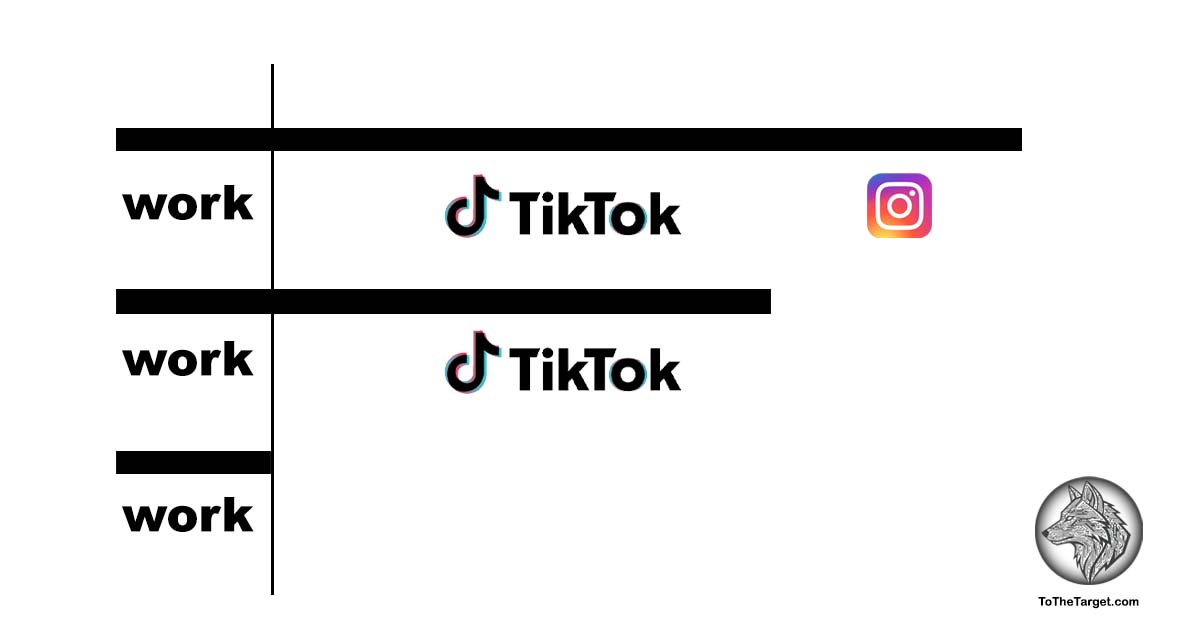
Parkinson’s Law at personal level:
Why a 30-Minute Decision Consumes Your Entire Day (and How to Activate the Focus Shield)
In 1955, British historian C. Northcote Parkinson formulated a principle that would become foundational in organizational theory:
“Work expands so as to fill the time available for its completion.”
While at an organizational level this law inflates entire departments, meetings, and project budgets, inside your own mind it acts as a devastating cognitive trap: it transforms a straightforward 30-minute decision into an exhausting, day-long ordeal.
When you tell yourself in the morning, “I have the entire afternoon to write this project plan,” your brain does not use those four hours to produce brilliant strategic insights. It fills the space with micro-hesitations, dozens of open browser tabs, aimless coffee breaks, and cosmetic font formatting.
By the end of the day, your mental fuel is completely depleted, even though the actual value produced could have been captured in a single hour of dense, focused execution.
The Anatomy of Self-Sabotage: Why We Allocate Excessive Time
Nobody sets out to waste time intentionally. The personal dilation of time is fueled by three distinct cognitive errors:
- Deliverable Ambiguity (Lack of a Personal Definition of Done):
When you lack a precise, written definition of what constitutes a minimally acceptable deliverable (core metrics, essential functional parameters, required decisions), you allocate a massive time buffer as an emotional safety net. Without an explicit finish line, the brain never knows when to stop. - Perfectionism as an Emotional Shield (Disguised Procrastination):
Dilating time is frequently a defense mechanism against external evaluation. You delay the moment a deliverable is exposed to judgment by indefinitely prolonging the “research” or “fine-tuning” phase. You convince yourself that you are working hard, but in reality, you are merely avoiding vulnerability. - The Proportionality Illusion (More Time = More Importance):
We harbor an irrational belief that high-stakes work must be agonizing and time-consuming. Solving a critical strategic problem in 20 minutes triggers an unearned sense of guilt. Consequently, we introduce artificial complexity to justify the perceived importance of the task.
The Overcontrol Spiral: Why Chaotic Verification Destroys Execution
One of the most damaging byproducts of Parkinson’s Law is the Doubt Spiral (Analysis Paralysis).
When you have excess time remaining after completing a core draft, you rarely step away. Instead, you begin re-reading the material aimlessly:
- Every unstructured review conducted under cognitive fatigue activates fresh insecurities.
- You begin rewriting solid arguments, overcomplicating clear charts, and inserting secondary details that bury the primary message.
- Instead of providing clarity and peace of mind, unstructured verification fuels anxiety, locking you into an endless loop of counterproductive edits.
The Core Mechanism: Activating the Focus Shield
To prevent your calendar from expanding, rely on physical and procedural constraints rather than raw willpower:
- Aggressive Micro-Timeboxing: Never schedule an analytical task as a vague 3–4 hour block. Cap individual deep-work sessions at 45–60 minutes. Place a visible physical timer on your desk to anchor finite urgency.
- The Strict Split (Creation vs. Editing): During the first phase, force the 80% Ugly Rough Draft—lay down the logical framework without pausing to fix typos, rephrase sentences, or adjust formatting.
- Friction-Sealed Monotasking: Close every application except the active working document and move your phone to another room. With no escape avenues, the brain is forced to direct its energy exclusively into solving the problem.
Application Filter: Routine Tasks vs. Novel Tasks
- Routine Tasks (“Factory Mode”): You already have a historical baseline. If a 15-minute repetitive task takes an hour, the root cause is low self-discipline and fragmented attention. The Solution: Batch similar tasks together and enforce a strict, unyielding time ceiling (Hard Cap).
- Novel / Complex Tasks (“R&D Mode”): You lack an exact benchmark, and ambiguity triggers fear of failure and overthinking. The Solution: Force a compact sprint to produce an 80% rough prototype. Once the logical skeleton is on paper, ambiguity evaporates, turning the remaining time into controlled structural refinement.
If you liked this article, you’ll love what’s inside. This tool is forged and battle-tested inside our playbooks: