Carlson’s Law, Attention Residue, and the Interruption Tax
The Physics of Unfragmented Work and How to Eliminate the Invisible Cost of Context Switching
In the modern corporate workplace, a dangerous illusion prevails: the belief that an effective executive must be constantly connected, instantly reachable, and capable of juggling multiple parallel conversations.
Workplace science proves the exact opposite: attention fragmentation is the most destructive mechanism of intellectual productivity ever devised.
To understand why a day filled with real-time chat messages, “urgent” emails, and 30-second drop-by interruptions leaves you cognitively depleted without completing a single high-impact objective, we must integrate three foundational discoveries:
1. Carlson’s Law (1951): The Law of Continuous Sequence
Swedish economist Sune Carlson was the first to empirically measure executive behavior in his pioneering study Executive Behaviour. His core finding remains a foundational axiom in management theory:
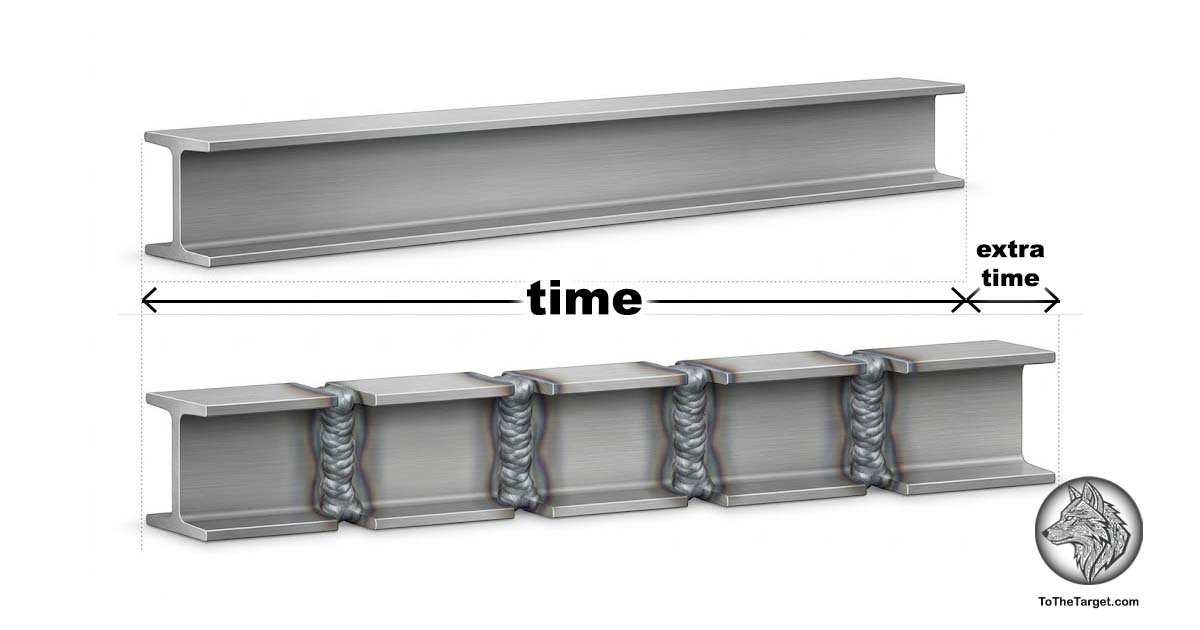
“Work interrupted takes more time and consumes considerably more energy than if completed in a continuous sequence.”
When you work in fragments, total completion time is never just the sum of individual working blocks. Every interruption imposes a friction tax: the time required to reconstruct where you left off, re-read your last paragraphs, and reload the complex mental model back into your working memory.
2. Attention Residue (Sophie Leroy, 2009): Why the Brain Remains Trapped
While Sune Carlson identified the empirical symptom, Dr. Sophie Leroy (University of Washington) uncovered the underlying neurobiological mechanism, coining the concept of Attention Residue:
- The human brain does not function like a digital toggle switch that flips instantly from one complex task to another at 100% capacity.
- When you work on a complex strategy document (Task A) and glance for 30 seconds at an incoming client message (Task B), your attention does not transition cleanly.
- A significant portion of your prefrontal cortex’s “working RAM” remains anchored in Task A (or preoccupied with the unresolved implications of Task B).
- When you return to Task A, you operate with an impaired brain. A sizable fraction of your cognitive bandwidth remains trapped in lingering mental residue.
If you switch contexts 15–20 times an hour, your brain operates with 60–70% of its working memory clogged by residue. You are physically present at your desk, but computationally, you are a computer suffocating under 40 active background browser tabs.
3. The 23-Minute Re-Entry Tax (Gloria Mark / UC Irvine)
What does a seemingly trivial interruption—“Do you have two quick minutes?”—actually cost in hard operational numbers?
Extensive workplace telemetry conducted by Professor Gloria Mark at the University of California, Irvine, reveals the stark mathematics of the modern office:
- On average, a knowledge worker is interrupted or switches focus every 3 minutes and 5 seconds.
- Following a significant interruption, the brain requires an average of 23 minutes and 15 seconds to return to its original state of deep focus.
The Brutal Reality: A 30-second distraction does not cost 30 seconds. It costs half a minute of diversion plus 23 minutes of cognitive turbulence before you recover full analytical horsepower.
The Technology Analogy: Sequential Streaming vs. Processor Thrashing
In computer architecture, when you transfer a massive 50 GB 4K video file from one drive to another, write speeds remain at their maximum theoretical limit as long as the transfer runs sequentially (one file at a time).
If you force the system to copy ten massive files concurrently, the operating system enters I/O Thrashing: the memory buffer saturates, the controller frantically toggles between memory sectors, bandwidth collapses, and total transfer time triples.
Your brain operates under identical physical laws:
- Monotasking (Sequential Execution) dedicates full cognitive bandwidth to a single high-value data stream.
- Multitasking and Constant Interruptions force your prefrontal cortex into continuous Cognitive Thrashing.
The Traps of Fragmented Work
- The Multitasking Delusion (False Parallel Processing):
The human brain cannot process two complex cognitive tasks in parallel. What we term multitasking is simply rapid Task Switching. Every switch burns neural glucose, leaves behind attention residue, and increases error rates by over 50%. - The “Instant Response” Culture (The Firefighter Complex):
Many corporate teams confuse responsiveness with productivity. Demanding that a knowledge worker reply on messaging channels within 3 minutes structurally prohibits them from ever entering deep flow states. - The “Hotline Illusion” (Smartphone Slot Machines):
The primary enemy of focus is no longer office email, but the smartphone engineered as a dopamine-driven variable reward machine. Executives check notifications with the urgency of a head of state managing an international crisis, even though 99% of incoming noise consists of trivial interruptions that destroy high-leverage thinking.
The Protection Protocol: Engineering Unfragmented Execution
To neutralize Carlson’s Law and eliminate attention residue, install three structural boundaries:
1. The Sealed Focus Bubble
- Block compact execution windows of 60–90 minutes in your calendar (aligned with natural ultradian cycles).
- Close all real-time communication platforms (chat channels, messaging apps, email clients).
- Place your phone in “Do Not Disturb” mode out of physical sight. Inside the bubble, only one active working document exists on your screen.
2. Batch Asynchronous Communication
- Message processing is not an ongoing background activity; it is a dedicated administrative task (Phase 2 energy).
- Establish two (maximum three) fixed daily windows for processing communication (e.g., 11:30–12:00 and 4:30–5:00 PM).
- Outside these windows, inboxes remain closed. Genuine operational emergencies are handled via direct phone calls, never via email.
3. The “Context Clearing” Protocol (For Inevitable Interruptions)
If a critical emergency forces you to interrupt an active deep-work session:
- Do not switch immediately. Take 30 seconds to log three points on a physical notepad:
- Exactly where did I stop?
- What is the immediate next logical action upon return?
- What working files/data were open?
- Offloading the mental context onto paper signals to the brain that the open loop is secured. Attention residue drops by over 80%, allowing you to handle the emergency cleanly and return without paying the 23-minute re-entry tax.
Executive Conclusions
- The Fragmented Manager: Operates with notifications active, switches between 15 tasks an hour, prides themselves on continuous availability, and delivers shallow work compromised by cognitive residue.
- The Shielded Leader: Respects the physics of attention, operates inside sealed continuous blocks, batches communication asynchronously, and ruthlessly protects their prefrontal cortex from chaotic context switching.
Executive value is not measured by the speed of reacting to trivial noise, but by the depth and clarity of decisions forged in uninterrupted silence.
Seal the session, clear the residue, and let execution flow continuously!
If you liked this article, you’ll love what’s inside. This tool is forged and battle-tested inside our playbooks: